Tuesday, April 14, 2015

Twelfth Night or What You Will

Twelfth Night or What You Will
October 25, 1996
Renaissance Films
Comedy, Romance, Historical
VHS
B-

My review of the play is here: http://rereadingeverybookiown.blogspot.com/2011/11/twelfth-night.html.  No, I wouldn't put this movie on that level-- it just doesn't build to anything-- but it is somewhat entertaining.  There are some puzzling choices for setting.  Why is it set in the Victorian period and filmed in Cornwall?  (When I saw the movie the Fall after a trip to England, I immediately recognized St. Michael's Mount on the screen.)  Not that this interferes with my enjoyment, but it is distracting.  I thought the movie did a nice job balancing the queer subtext of the original, even with women in the women's roles.

The cast is overall solid and I think Imogen Stubbs does well with Viola and Cesario, very different from her duplicity as Lucy Steele in Sense & Sensibility, since she has a reason for her deception here, and she makes both characters likable.  (Her Cesario is actually quite handsome and charming.)  As I said in my "book" review, 30-year-old Helena Bonham Carter is lovely as Olivia, and I like how she adds some sweetness and a sense of humour to the character.  Her maid Maria is played by Imelda Staunton, who had been Lucy's cousin and several years later would debut in the Harry Potter series in the same installment (fifth) as Carter, the two of them playing two very different villaineses.  Mel Smith plays Olivia's drunken uncle and does it with more subtlety than he showed in his brief self-direction in The Tall Guy.  Nigel Hawthorne, who plays Malvolio, would be Rodney Fraser in The Object of My Affection.

Sunday, April 12, 2015

The First Wives Club

The First Wives Club
September 20, 1996
Paramount
Comedy
VHS
C+

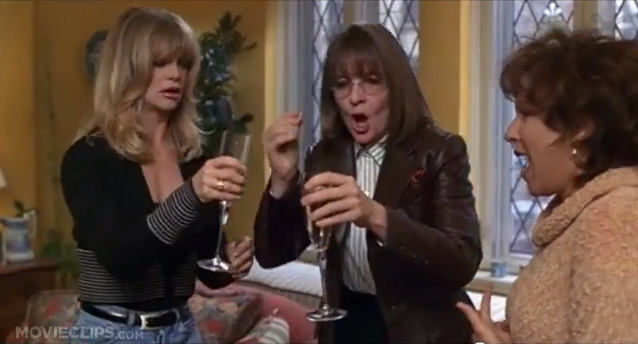
I really liked this movie at the time, as did many others, including Katha Pollitt, but that doesn't mean we were blind to its faults, faults that are more obvious a couple decades later.  As directed by WKRP's Hugh Wilson, it is very much a cinematic sitcom, with easy resolutions and cardboard characterizations.  Although it's based on a book (which I've never read), the most serious flaws have to do with the writing, many of the implausibilities and inconsistencies centering around Brenda (Bette Midler).  To begin with, is she Italian or Jewish?  If both, why isn't this established earlier?  And how is ir that her husband (Dan Hedaya, for a change in my movies actually typecast) fails to recognize her boss, even the name?  Also, the whole timeline is screwy, from Yellow Submarine coming out in '69 (rather than '68), to the central trio of first wives (Midler, Goldie Hawn, and Diane Keaton) all about 45, although this seems to be contemporary and they've been out of college for about 27 years.  I'm not even clear how much time is passing in the main story, although there's a vague time pressure (even vaguer than in Don't Tell Mom).  Maybe this is all clearer in the book.

The movie is of course notable for its presentation of the exes, particularly the ex of their suicidal friend Cynthia, as being shallow, insensitive, and ruled by their lust for younger women.  (Sarah Jessica Parker is playing against type as a dumb and tasteless blonde.)  But the wives don't come across as much better and, as in The Women almost 60 years earlier, it's unclear why they regret the loss of such awful men.  Yes, I like seeing the cast, and the theme of female friendship and empowerment is good, but it's often lost in slapstick and stereotyping.  And this isn't 9 to 5, where the stock characters are given believability.  There are nice little moments (like how accepting Keaton is of her lesbian daughter), and even occasional insights about how aging women are viewed, and Maggie Smith proves she can do a lot even with a tiny role, but it just doesn't add up to much.

I don't have any other movies with James Naughton but it's a nice touch to make him Cynthia's cheating ex-husband, since he was Angela Bower's ex on Who's the Boss?  (Cynthia is played by Stockard Channing.)  Victor Garber, who plays Goldie's ex, would be Professor Callahan in Legally Blonde.

Anne Shropshire, who's an A Certain Age cast member, was Mrs. Crawley in Tootsie.  Peter Frechette, who plays the Broadway Director, had his big-screen debut as none other than Louis DiMucci in Grease 2.  (He found a lot of other work in between of course.)  Aida Linares also played a maid in Clueless.

Marla Sucharetza, who's Exercising Woman, would be School Reporter in In & Out, while Debra Monk is Jilted Lover here and would be Mrs. Lester there, and  J. Smith-Cameron is Miss Sullivan here and would be Trina Paxton there.  Rob Reiner plays Hawn's plastic surgeon.  And, yes, that's 41-year-old J.K. Simmons in the small role of a Federal Marshall.


Friday, April 10, 2015

Emma

Emma
August 30, 1996
Miramax
Comedy, Romance, Historical
VHS
C+

While on the surface this may seem like a faithful adaptation of the Austen novel, I find it much less in the spirit than Clueless, not to mention the contemporary Kate Beckinsale TV-movie.  I'm going to have to blame writer-director Douglas McGrath for the main flaws: general miscasting (especially of Harriet), a cutesy device of a sentence being started in one scene ("So then I said....") and then finished in the next ("How delightful!"), and the shafting of the Frank Churchill/ Jane Fairfax subplot.  (Enchanted April's Polly Walker and 25-year-old Ewan McGregor both do their best, but they're given little to work with and are misdirected in most of what they do get.)

That said, there are moments when the film forgets its own unnecessary flourishes and focuses on Austen's still great dialogue and plotting.  Even if the cast isn't quite right, it is an interesting assemblage, including 23-year-old Gwyneth Paltrow in the title role (sufficiently British but too pouty), 31-year-old Alan Cumming as Mr. Elton, and of course Emma Thompson's mother and 34-year-old sister as Mrs. and Miss Bates.  I have to note that Jeremy Northam as Mr. Knightley and Greta Scacchi as Mrs. Weston are both much more interesting and attractive than anyone else in the movie, and I would've actually rather have watched a far from canonical backstory of them being in love ten or fifteen years earlier.


Wednesday, April 8, 2015

A Very Brady Sequel

A Very Brady Sequel
August 23, 1996
Paramount
Comedy, Musical
DVD
B+

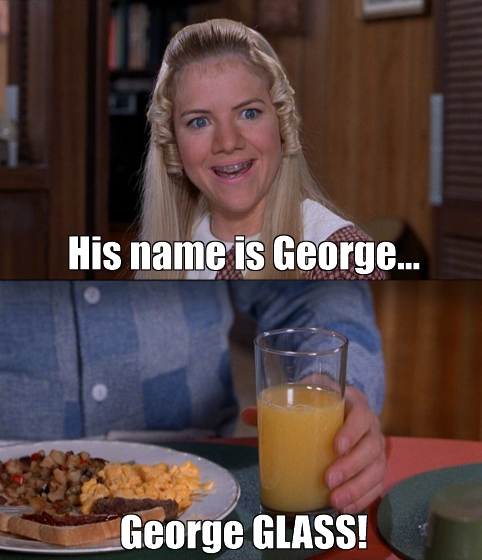
Yes, the sequel is better than its predecessor.  It's funnier, more focused, more musical, and yes, more Brady.  (Bradier?)  Even the youngest kids seem to have more to do here, although again the Marcia-Jan rivalry is the highlight, with Jan going to great lengths to convince her popular older sister of the existence of George Glass.  This seems to have struck a chord in recent months, with even "Sure, Jan" having gone viral.

The main plot though is about a conman who pretends to be Mrs. Brady's not actually dead husband.  He's played by Tim Matheson who had done his share of '60s TV and movies, notably as the college-age dad in How to Commit Marriage (then spelling his last name Matthieson).  This makes his horror at the Bradys, particularly their tendency to burst into bright, cheerful songs and choreography, all the better, with the Brady Kids mushroom trip a high comedically and otherwise.  His "return" also means that Greg and Marcia realize they're not actually related (even by marriage), which leads to some borderline incestuous lust that you're either going to find disgusting or hilarious.  (I'm in the latter camp of course.)

There are again a lot of in-jokes for Brady fans, and this time a pay-off that involves Gilligan's Island.  Also, we get a cameo from Barbara Eden, who seems hardly to have aged in the almost 40 years since she was Miss Carstairs in Will Success Spoil Rock Hunter? However, neither she nor Groucho now holds the longevity record, because Art Patron Sue Casey turns up 43 years after she was Tall Girl at Arcade in Band Wagon.  (And I know her best as the MILFy Anne Duval in Catalina Caper, but the MST3K version will be discussed on my TV blog someday.)  Steven Gilford and RuPaul reprise their roles as respectively Mr. Philips and Ms. Cummings.

Two of the four writers, Harry Elfont and Deborah Kaplan, would also co-write Josie and the Pussycats, which they would co-direct as well.  In a different way than Bonnie & Terry Turner, they've got a love for garish but bubbly pop-culture kitsch.


Monday, April 6, 2015

The Truth About Cats & Dogs

The Truth About Cats & Dogs
April 26, 1996
Fox
Comedy, Romance
VHS
B

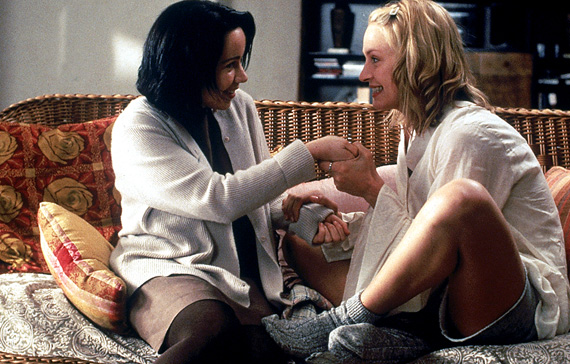
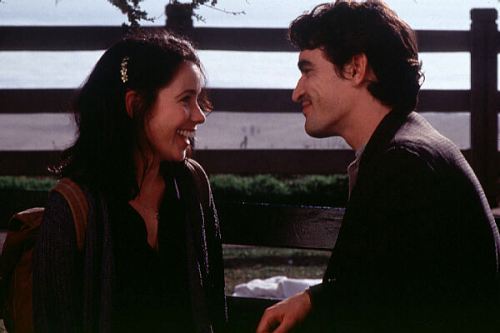
This is a bittersweet, funny, and amiable rom-com but it is not without its issues.  To begin with, our heroine Abby, as played by 31-year-old Janeane Garofalo, is just not plausible as a woman who is so insecure that she would lie about her own identity when she meets a charming, handsome, but down-to-earth Brit (Ben Chaplin).  (After all, it's not like she's got a huge nose, like Steve Martin in Roxanne.)  Without pitting women against each other, I do have to say that I'm not alone in finding Garofalo far more attractive than Uma Thurman, in this or any other movie.  Nothing against Ms. Thurman.  She's cute and quite likable here.  I enjoy the friendship dynamic between Abby and Noelle.  In fact, if this had been the indie movie that Garofalo thought she had signed on for, or for that matter a porn movie, the triangle could be resolved quite plausibly with a threesome.   The chemistry among Garofalo, Chaplin, and Thurman is strong enough, and a ménage à trois might actually work better than what this movie offers, which is a dubious lesson about how when you get to know and like someone, they can become much more attractive.  Even more dubious is that the women deceive Brian for far too long.  Yes, he seems a bit thick to not catch on, but it's an unfair situation to put him in.

That said, there are some great scenes, among them the non-explicit phone sex and the "free radicals in my regime" beauty counter encounter and its follow-up ("If I were a guy, I'd fuck you," "I know you would, Sweetie").  Since I'm a cat-person, I like seeing Abby with her cat, and the dog is cute, even if the roller-skating is a bit much.  Also, it's a very '90s movie, almost modern (especially in its body-image subject matter), but still before the widespread use of the Internet and cell phones, which would've impacted the plot in various ways.  Definitely a must-see for Garofalo fans, since she's very sarcastic yet vulnerable here, in a different way than in her scene-stealing role in the next year's Romy & Michelle's High School Reunion.

One of the Newcast Auditioners, Linda Porter, would be Mrs. Crabbleman in Dude, Where's My Car?

Saturday, April 4, 2015

The Celluloid Closet

The Celluloid Closet
March 15, 1996
HBO etc.
Documentary
VHS
B

Although this remains an insightful and often funny look at the history of gays and lesbians (and to a lesser degree transfolk and bisexuals) in a century's worth of movies, I don't think it has aged entirely gracefully.  There are two things, not unrelated.  One, almost twenty years have passed, and the way we look at "gay movies," and indeed the LGBT (etc.) community/communities has changed.  Homophobia definitely still exists, but there's a lot more mainstream tolerance, as evidenced in the progress with the gay marriage issue.  Also, sexuality (which now includes asexuality) is by no means a binary subject anymore.  (Not that it ever was, but people are more conscious of that.)  And two, although this is better organized than Hollywood Uncensored, I felt it didn't do a good enough job of putting things in context with the larger culture.  For example, there's only a brief mention of the medical view of homosexuality and some mention of Catholic censorship, but Hollywood was heavily affected by the perspectives of the dominant culture.  Still, the movie continues to offer a different way of seeing the movies, and I know I've never been able to watch the gymnasium scene in Gentlemen Prefer Blondes without grinning.

With the exception of Will H. Hays, I've decided not to tag everyone in the film clips, but instead focus on those who are interviewed (Gore Vidal is hilarious of course), as well as Tomlin, who narrated.  At the time this movie was released, she wasn't officially out, but then she was never exactly closeted either.  Interestingly, Paul Rudnick would soon write In & Out, which was quite an experience to see with a mainstream audience.

The movie is based on a much more pessimistic book by Vito Russo, who had died in 1990.

"I just went gay all of a sudden!"

Thursday, April 2, 2015

Sense and Sensibility

Sense and Sensibility
January 26, 1996
Columbia
Comedy, Drama, Romance, Historical
DVD
B+

My review of the book is here:  http://rereadingeverybookiown.blogspot.com/2011/12/sense-and-sensibility.html.  On balance, I think the movie and book are equal, for reasons I discuss there.  So let me just mention a few things, I didn't cover before, in particular, the casting.  As you can see, I've tagged a heck of a lot of people, three of whom were in Peter's Friends:  Emma Thompson of course, and Hugh Laurie & Imelda Staunton, again playing a married couple, although their height difference is used for more comic effect here.  Everyone of the tagged performers, except the two Hughs and Imogen Stubbs (who is Lucy here and would shortly appear in Twelfth Night with Imelda Staunton), would be in at least one Harry Potter movie, while Grant and Jones would be in both Bridget Jones movies.

This cast cosiness adds to the feel of the movie, which is, as it title suggests, very much about thoughts and feelings.   (And Thompson, whose marriage to Kenneth Branagh was breaking up at the time, would find love with Greg Wise, who plays Willoughby here.)  With the female side of the Dashwood family in particular (Jones, Thompson, Kate Winslet, and a quite good Emilie François as Margaret), we see how much they care, not in a corny way but as if the family is central to their identities, romances aside.  Watch for instance how Edward's proposal is told not through Thompson and Grant but through the reactions of her mother and sisters.  Meanwhile, Alan Rickman gives a performance throughout the film that is more about what he doesn't say than what he does.  (And he already has developed the Snapian pauses by the way.)

The other thing I really appreciated this go-round was the scenery.  It's not as lovely as Italy in Enchanted April, but in its own understated way England (Devonshire especially) is figurative as well as literal background to the mood of the story.